COMSOL has the best multiphysical simulation capabilities in my experience. Technical support from Elisa at TECHNIC as well as the engineers at COMSOL has been great.
COMSOL is an important part of our research in plasma physics. We use it in the design of plasma systems and it helps us to obtain a greater understanding of the underlying physics. We have always valued the quick support from TECHNIC and COMSOL and it has been a pleasure to work with them.
Comsol has become a valuable part of our design and decision making process. The exceptional flexibility and access to the physics and solvers in Comsol has allowed us to have deeper understanding on thermomechanical solutions. Technic and Comsol have always been quick and helpful to resolve any issues and provide helpful advice on their products.
At Scion we use COMSOL Multiphysics to understand energy processes, such as the interplay of non-linear solid mechanics and heat & mass transfer during biomass compaction, to design new or more efficient processes.
We use COMSOL Multiphysics to design the customised muffler. With it, we can simulate the insertion loss at different spectrum with different muffler designs.
Analysing electromagnetic systems and processes that encompass static and low-frequency ranges requires a powerful and flexible simulation tool. The AC/DC Module add-on to the COMSOL Multiphysics® platform provides you with a wide range of modelling features and numerical methods for investigating electromagnetic fields and EMI/EMC by solving Maxwell’s equations.
The multiphysics capabilities of the COMSOL® software make it possible to investigate the impact of other physical effects, such as heat transfer, structural mechanics, and acoustics, on an electromagnetics model.
When you expand COMSOL Multiphysics® with the AC/DC Module, you unlock features for specialised low-frequency electromagnetics modelling in addition to the core functionality of the COMSOL Multiphysics® software platform.
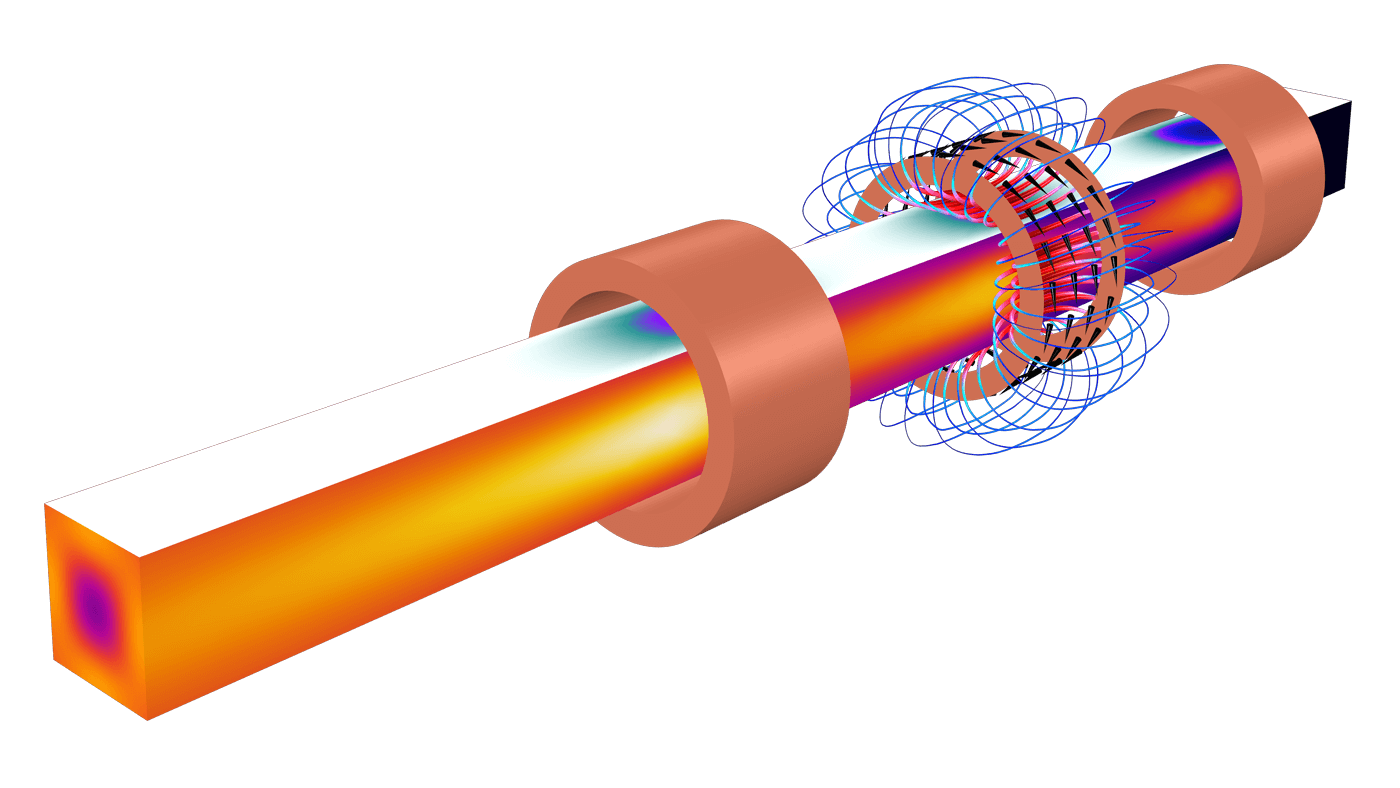
Explore the features and functionality of the AC/DC Module in more detail by expanding the sections below.
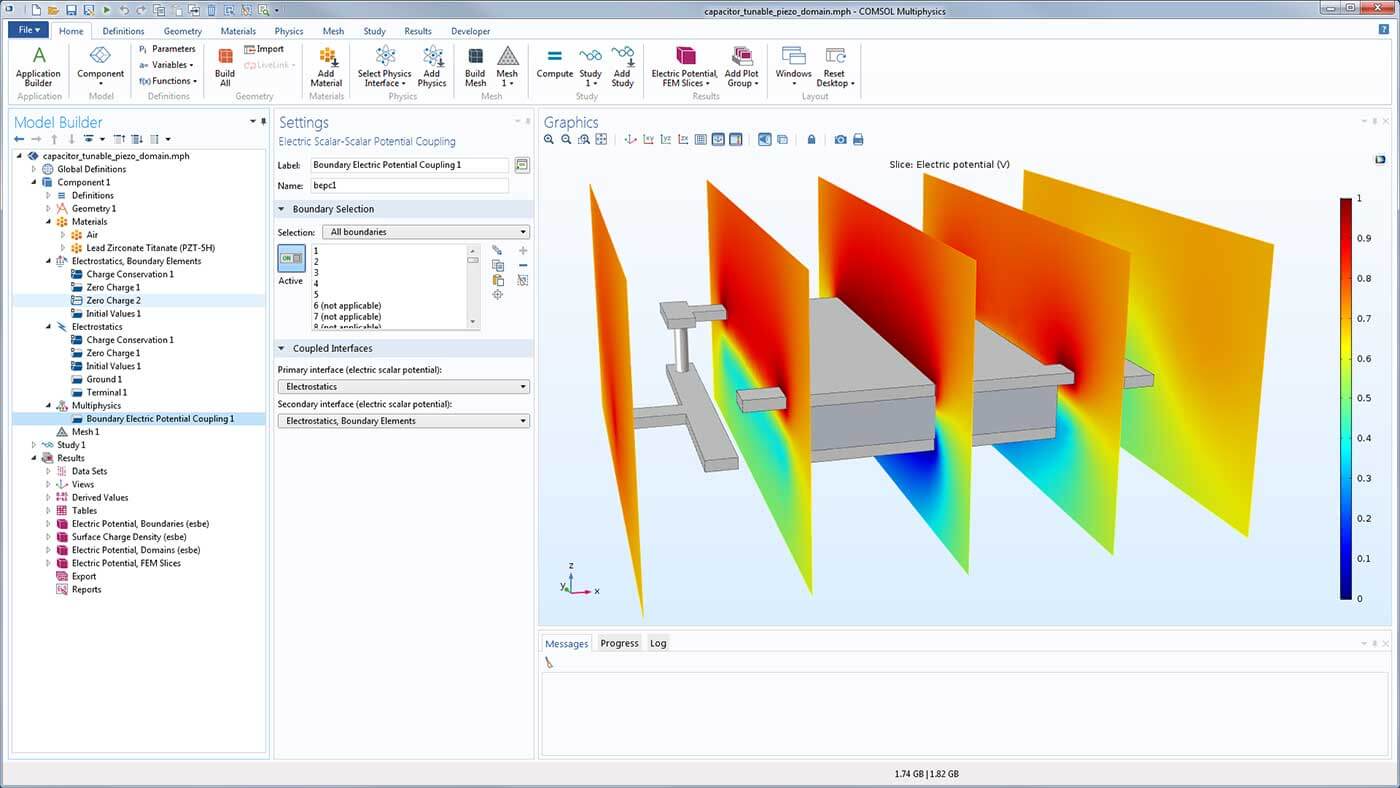
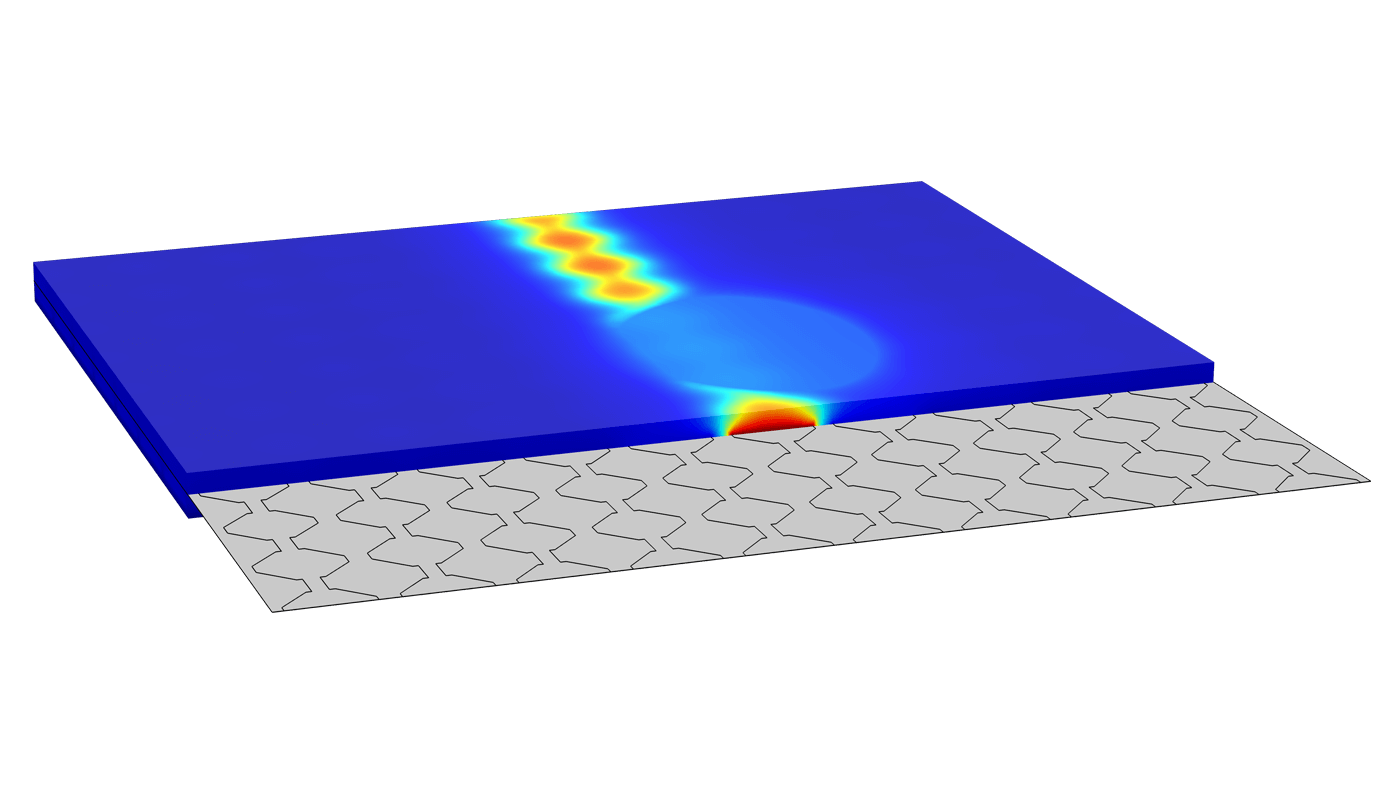
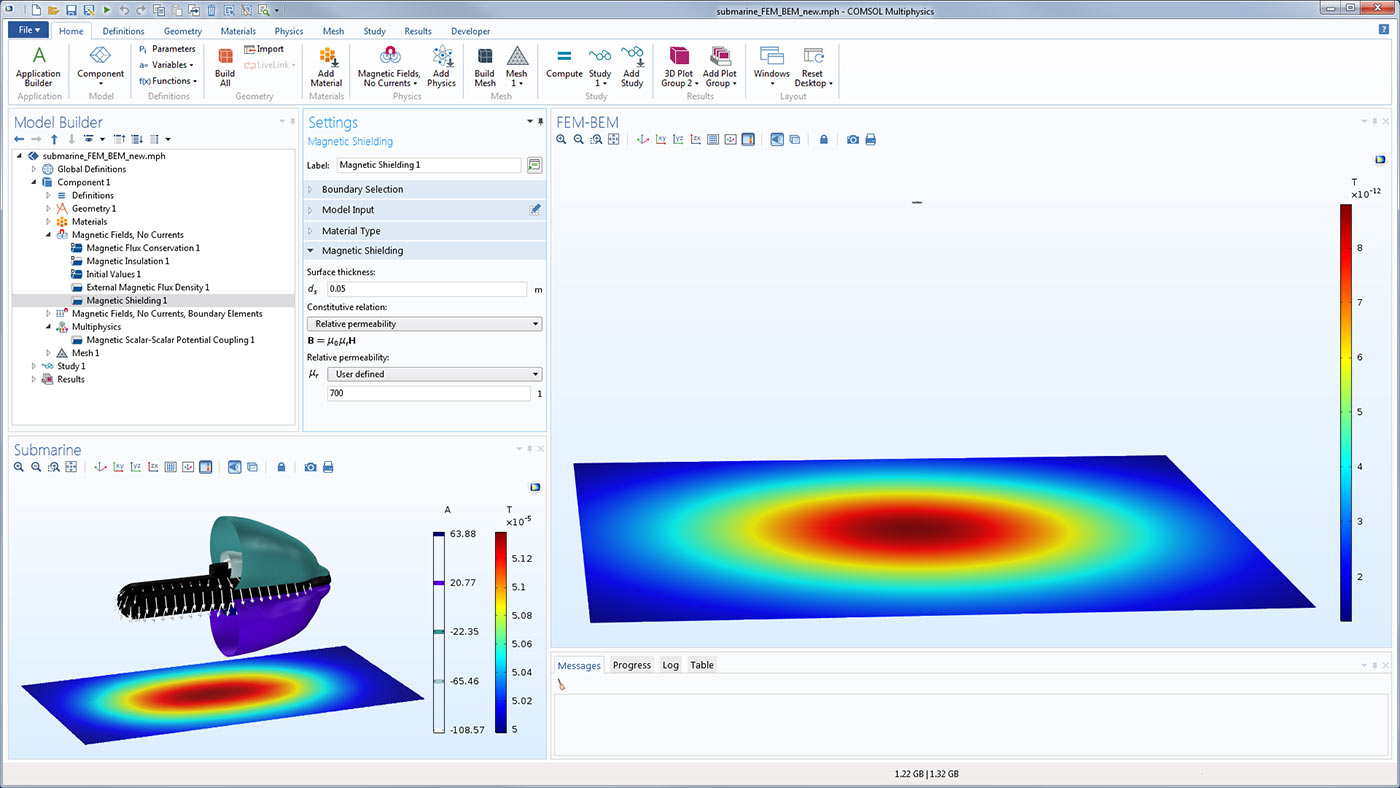
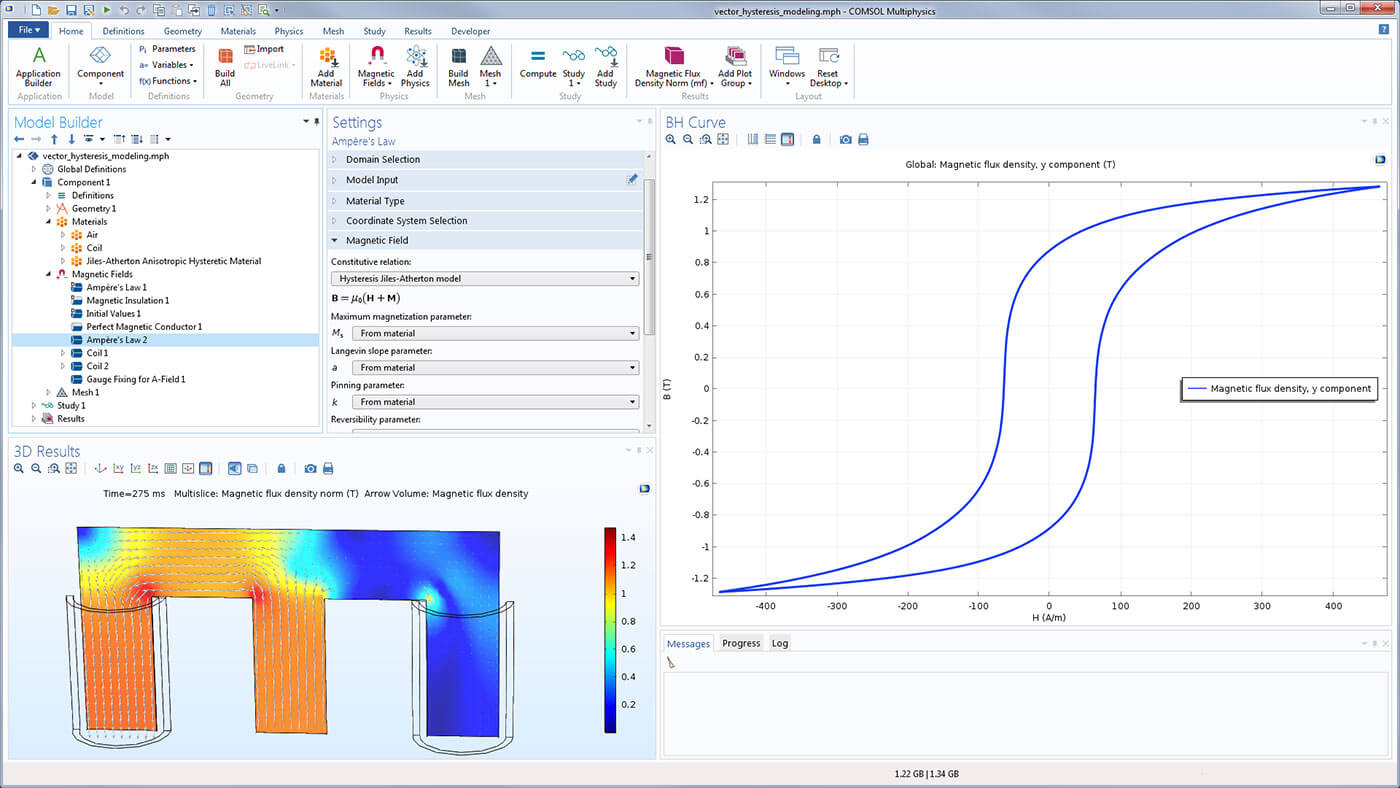
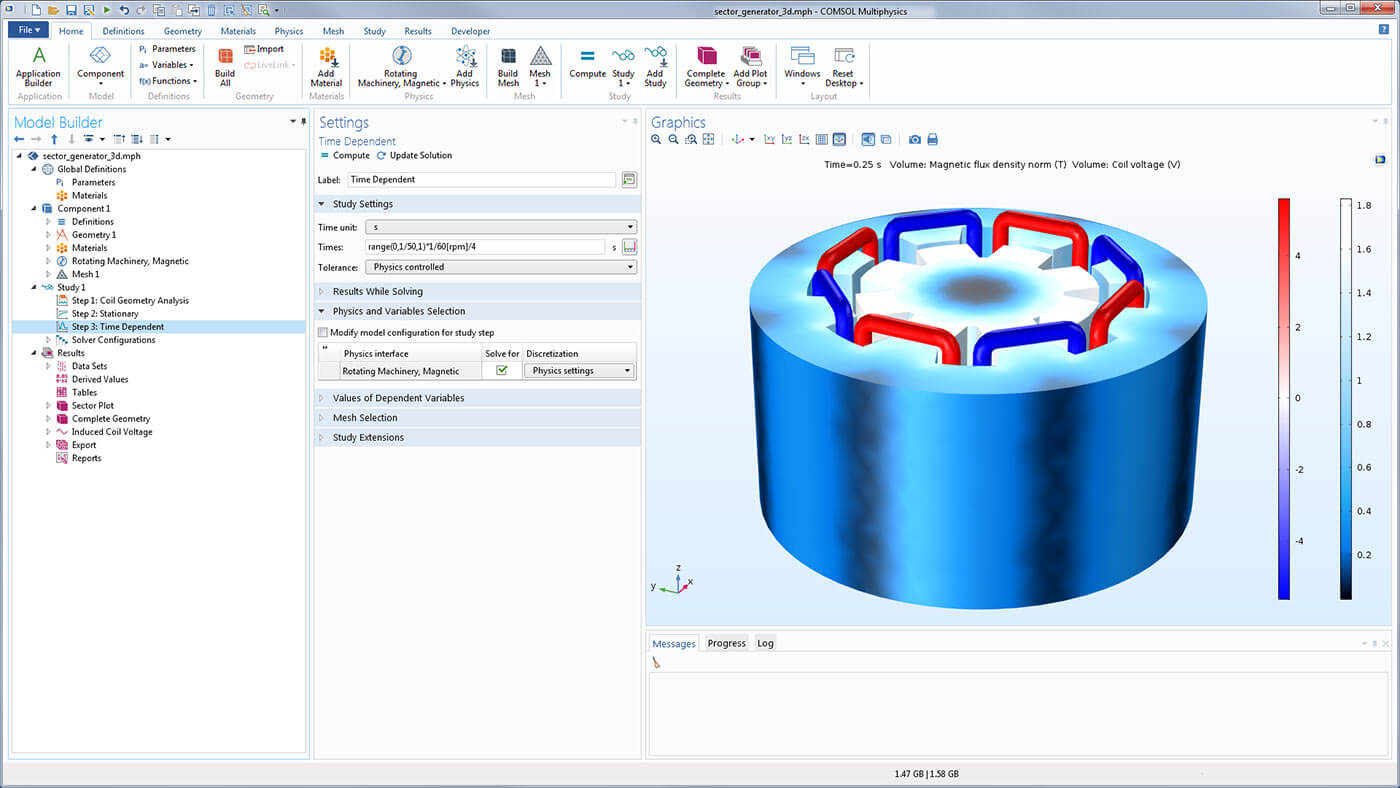
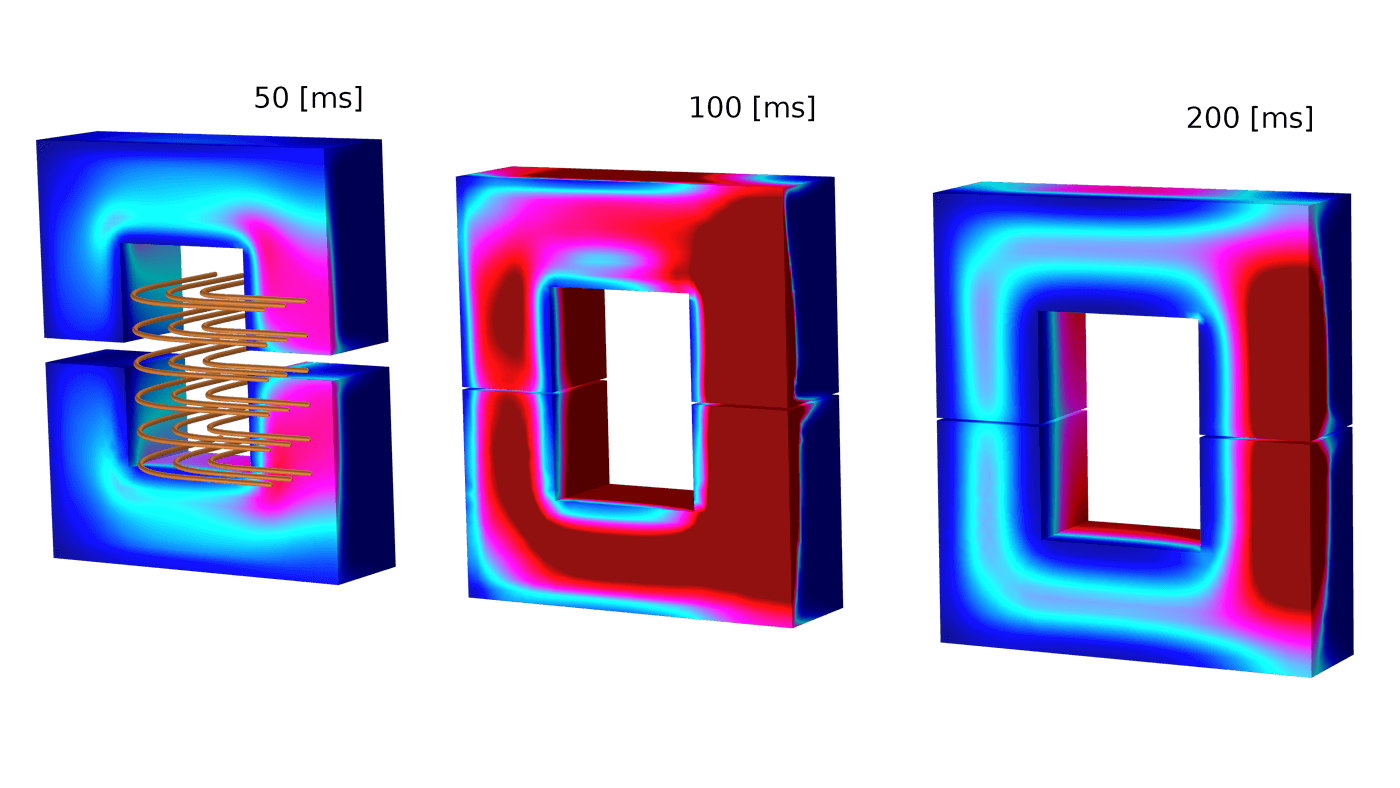
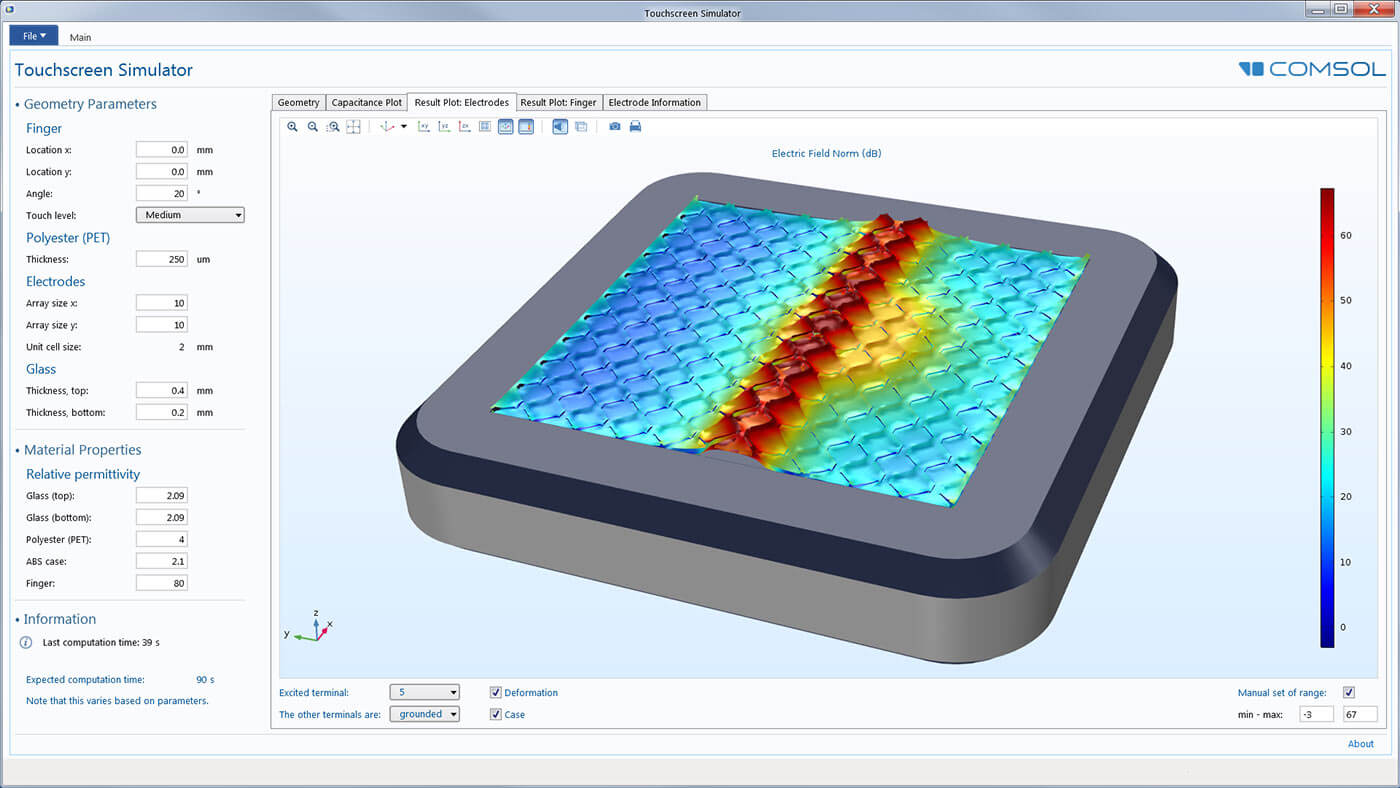
Make your simulation process more efficient with the built-in Application Builder by turning your models into specialised applications with customised inputs and outputs. You can distribute the applications you make to colleagues without simulation expertise so they can perform repetitive analyses on their own, streamlining the design process.
The workflow is simple:
You can expand the capabilities of simulation throughout your team, organisation, classroom, or customer/vendor base by building and using simulation apps.
If you use the MATLAB® software, you can easily drive COMSOL Multiphysics® simulations with MATLAB® scripts and functions. The LiveLink™ for MATLAB® interfacing product enables you to access COMSOL® operations through MATLAB® commands and blend these commands with your existing MATLAB® code, directly within the MATLAB® environment.
In order to make it easy for you to analyse electromagnetic properties of CAD models and electronic layouts, COMSOL offers the ECAD Import Module, CAD Import Module, Design Module, and LiveLink™ products for leading CAD systems as part of our product suite. The LiveLink™ products make it possible to keep the parametric CAD model intact in its native environment but still control the geometric dimensions from within the COMSOL Multiphysics® software, as well as produce simultaneous parametric sweeps over several model parameters.
You can also synchronise Microsoft® Excel® spreadsheet data with the parameters you define in the COMSOL Multiphysics® environment via the LiveLink™ for Excel® interfacing product.
View all available interfacing products in the product suite.
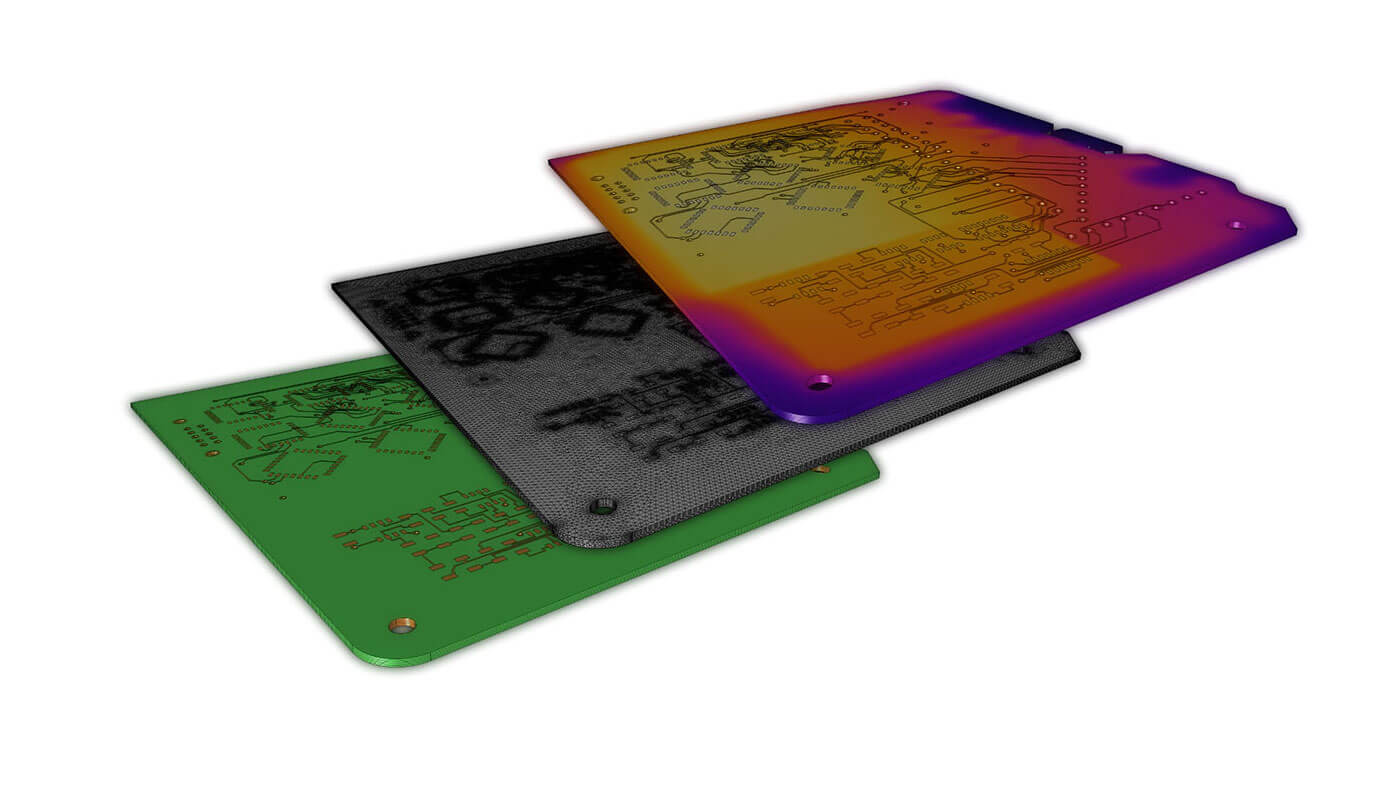
The products, devices, and components you design for the static or low-frequency range need to operate safely in the real world. For a comprehensive analysis, use the COMSOL Multiphysics® software and the AC/DC Module to see how multiple physics affect your design.
Most electromagnetic components, devices, and products are affected by another branch of physics, whether it be heat transfer, structural mechanics, or acoustics, to name a few. For the most accurate study possible, you can examine a variety of these effects simultaneously. The COMSOL Multiphysics® platform enables you to couple multiple physical effects in one software environment.
In order to fully evaluate whether or not the COMSOL Multiphysics® software will meet your requirements, you need to contact us. By talking to one of our sales representatives, you will get personalised recommendations and fully documented examples to help you get the most out of your evaluation and guide you to choose the best license option to suit your needs.
Fill in your contact details and any specific comments or questions, and submit. You will receive a response from a sales representative within one business day.
 Tel: +61 (03) 6224 8690Email: info@technic.com.auConnect on LinkedInGet Your Free Trial
Copyright © 2021 Technic Pty Ltd. All Rights Reserved. See our Privacy Policy. Site protected by reCAPTCHA - Privacy | Terms. Website by Gloo.
